A patient acquisition funnel is the staged process telehealth brands use to attract, convert, and retain patients, from first awareness to a booked visit, repeat care, and referrals. Patients rarely book on first contact, so each stage needs its own message, channel, and metric. This guide defines the five stages, the metrics to track at each, and how to build the funnel step by step.
Key Takeaways
- The funnel moves prospects through awareness, consideration, decision, retention, and advocacy.
- Engaging patients at every stage produces cheaper, better-qualified leads than bottom-funnel tactics alone.
- Track CPC for awareness, CPL and lead quality for consideration, and CPA for decision.
- Match each channel to patient intent, from paid social at the top to retargeting at the bottom.
- Cookieless first-party tracking and trusted publisher partners make personalization possible without risking patient privacy.
What is a Patient Acquisition Funnel?
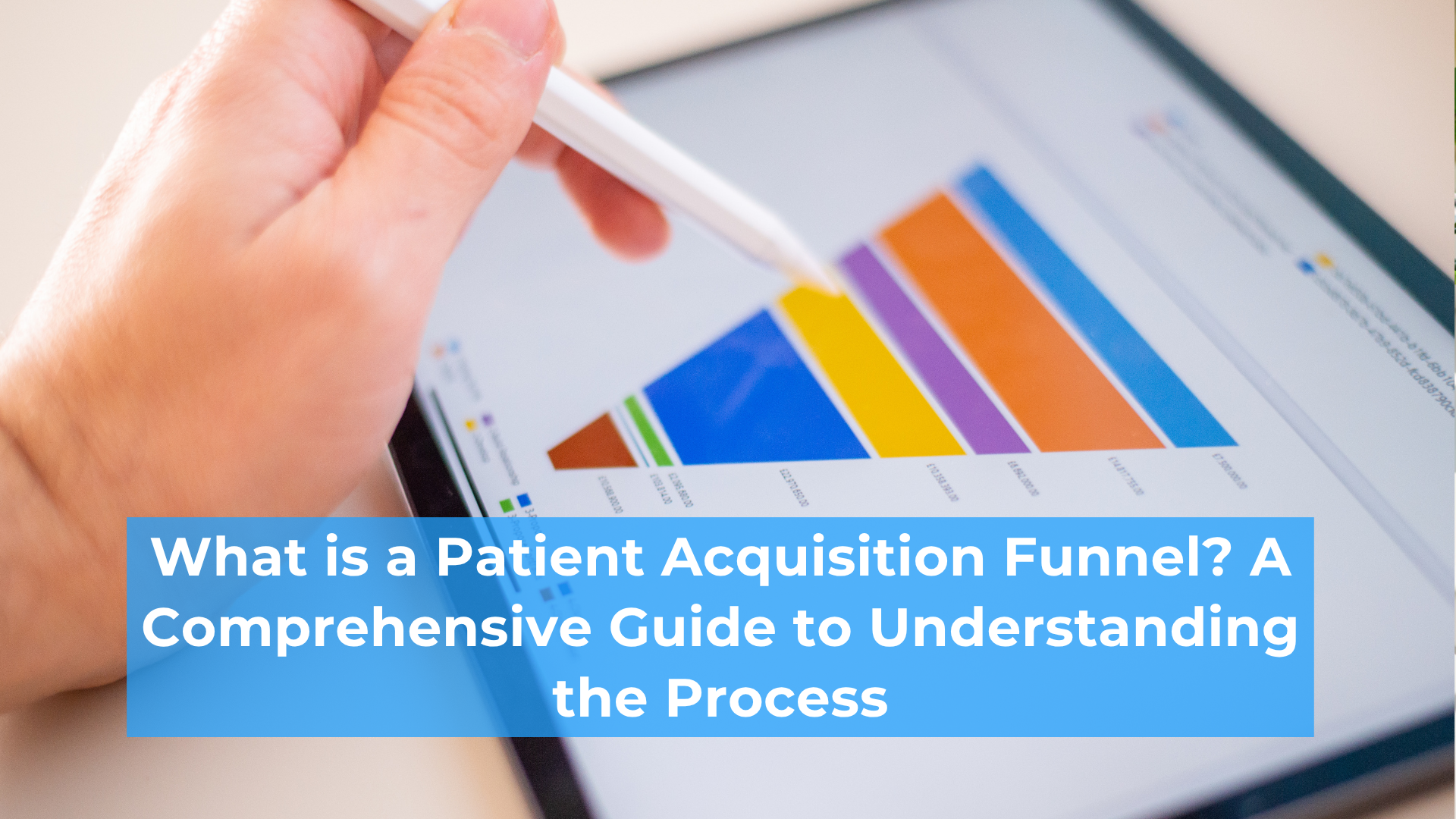
A patient acquisition funnel is the full path a prospect takes from first hearing about a telehealth brand to booking a visit, plus what happens after that first visit. It mirrors how patients move through awareness, consideration, and decision as they judge your services.
You build this framework for three reasons:
- To track behavior at each touchpoint. A touchpoint is any place a patient meets your brand, such as an ad, a search result, a partner article, or an email.
- To find where prospects drop off.
- To improve your marketing one stage at a time.
Patient acquisition costs make this discipline more urgent. According to Foundry CRO’s 2026 healthcare marketing benchmarks, patient acquisition cost climbed 56% from 2022 to 2025 across specialties.
How Does a Patient Funnel Differ From a Traditional Sales Funnel?
A patient funnel differs because patients need education, confidence, and reassurance before making a medical decision. A health choice carries more weight than a typical online purchase.
Patients also move at different speeds depending on:
- How urgent their health need is
- Their insurance coverage or budget for cash-pay care
- Personal preferences, such as video versus asynchronous visits
The practical shift is from chasing every lead to guiding the right patients through each stage of their decision.
Understanding the Stages of the Patient Acquisition Funnel
The funnel has five stages, and each needs its own strategy:
- Awareness: The prospect first discovers your brand.
- Consideration: The prospect researches and compares providers.
- Decision: The prospect books a visit.
- Retention: The patient returns for ongoing care.
- Advocacy: The patient refers others and leaves reviews.
How do Awareness, Consideration, and Decision Differ in the Patient Funnel?
They differ by patient intent: awareness earns attention, consideration earns trust, and decision drives a booking. Each needs a different message and metric.
| Stage | Patient Mindset | Your Goal | Main Metrics |
|---|---|---|---|
| Awareness | “I have a health need, but I don’t know you yet.” | Get discovered by the right audience | Impressions, CPC |
| Consideration | “Which provider fits me best?” | Earn trust with education and proof | CPL, lead quality |
| Decision | “I’m ready to book.” | Remove friction from booking | CPA, conversion rate |
Mixing up stages wastes budget. A “book now” ad shown to someone who just learned about a condition often gets ignored, while a long educational post can slow down someone ready to book.
What Happens During the Awareness Stage?
The Awareness stage introduces potential patients to your brand through targeted ads and media planning strategy. The goal is attention, not immediate bookings.
Core awareness channels include:
- SEO: Helps patients find you when they search for care online.
- Pay-per-click (PPC): Search ads where you pay for each click.
- Programmatic advertising: Software that buys ad space automatically based on audience data.
- Paid social: Puts your telehealth offering in front of prospects early in their research.
- Publisher and creator partnerships: Place your brand in content your audience already reads.
Katalys connects telehealth brands with a vetted network of 4,000+ publishers, creators, and media buyers. Through the Partner Marketplace, brands can invite these partners into their program to reach prospects who may not know the brand yet. Katalys’s proprietary attribution engine is cookieless and server-side, so it credits each conversion to the right partner without relying on browser cookies.
How Do Patients Move Through the Consideration Stage?
Patients in the Consideration stage compare providers across several channels, looking for proof that you fit their needs. Content quality and social proof determine who makes the shortlist.
Consideration touchpoints include editorial content, comparison sites, newsletters, social media, and paid search results. Real-time conversion tracking shows which of these move patients forward.
Online reviews are among the strongest consideration-stage signals. A rater8 survey reported by Medical Economics found that 84% of patients check reviews before choosing a provider, 51% read at least six, and 61% would let negative reviews override a personal recommendation. Ask satisfied patients for reviews, and respond to negative ones calmly without sharing patient details.
Pricing models let you pay for engagement at different depths: cost-per-click (CPC), cost-per-lead (CPL), and cost-per-action (CPA).
What Actions Define the Decision Stage in Patient Acquisition?
The Decision stage is defined by commitment: the prospect books a visit. Patients here need a clear, fast path to finish their choice.
Four actions move decision-stage prospects to a booking:
- Track attribution: Real-time conversion data shows which touchpoints shaped the final choice.
- Guide with placements: Search and paid social retargeting steer prospects back to booking.
- Remove friction: Cut steps from the scheduling flow.
- Answer final objections: Address cost, insurance, eligibility, and wait times on the booking page.
Performance-based deal structures align your incentives with media partners, so both sides focus on high-intent prospects ready to convert.
How do Retention and Advocacy Improve Patient Relationships?
Retention and Advocacy turn one-time patients into repeat patients who refer others. Both create growth after the first booking without new acquisition spend.
The main retention tools are:
- Ongoing care guidance between visits
- Personalized follow-ups based on the patient’s care plan
- Simple refill, renewal, or rebooking experiences
- Links to trusted content that supports patient success
Real-time data shows which patients are most engaged, so you can invite them to leave reviews or refer friends. Trusted publisher and creator partnerships reinforce credibility long after the first visit.
Why is the Patient Acquisition Funnel Important for Telehealth Brands?
The funnel matters because it turns prospects into patients at every stage of their journey, not just at the moment of booking. Brands that manage the full funnel gain steadier volume, better retention, and lower blended acquisition costs.
Why Should Healthcare Providers Avoid Focusing Only on the Bottom of the Funnel?
A bottom-only focus skips the stages where patients first discover and trust a brand, leaving you to fight over the same small pool of ready-to-book patients.
Putting the entire budget into decision-stage tactics limits reach and forces you to compete on price or urgency instead of credibility. Costs make this riskier: patient acquisition cost ranges from about $155 for pediatrics to $2,500 for behavioral health, according to the Foundry CRO benchmarks cited above.
Multi-stage engagement delivers:
- More touchpoints, so prospects who aren’t ready today remember you later
- Qualified leads from search, content, and social that convert better at the decision stage
- Higher retention and patient lifetime value
- Budget spread across the funnel instead of concentrated in the most expensive clicks
What Key Metrics Should Telehealth Marketers Track at each Funnel Stage?
Track reach and CPC for awareness, CPL and lead quality for consideration, and CPA and conversion rate for decision. Retention and referral metrics cover the later stages.
| Funnel Stage | Key Metrics | Why It Matters |
|---|---|---|
| Awareness | Impressions, reach, CPC, CTR, brand search volume | Shows how many people discover you and how efficiently |
| Consideration | CPL, lead quality score, form completion, time on page | Shows what you pay for interested prospects and which become patients |
| Decision | CPA, conversion rate, booking rate, attribution data | Shows your true cost when a patient books |
| Retention | Retention rate, repeat bookings, email engagement, lifetime value | Proves the long-term value of acquisition spend |
| Advocacy | Referral rate, Net Promoter Score (NPS), review volume | Shows organic growth potential |
How to Build an Effective Patient Acquisition Funnel
Building the funnel means choosing channels by stage, mapping the patient journey, personalizing each touchpoint, and removing friction at booking.
Which Digital Marketing Channels Work Best at Each Funnel Stage?
Use paid social and SEM for awareness, comparison sites and educational content for consideration, and retargeting for decision. Email, loyalty, and referral programs drive retention and advocacy.
| Funnel Stage | Best Channels | Strategy & Focus | Pricing Model |
|---|---|---|---|
| Awareness | Paid social, SEM, native ads, editorial placements | Reach the right audience segments broadly | CPM (cost per 1,000 impressions), CPC |
| Consideration | Comparison sites, educational content, paid search, health publishers, creators | Provide comparisons, reviews, and credible education | CPL, CPC |
| Decision | Retargeting, high-intent SEM, direct response ads, booking integrations | Bring warm prospects back and make booking fast | CPA, CPL |
| Retention & Advocacy | Email, social engagement, loyalty and referral programs | Keep relationships active and reward referrals | Flat fee or performance-based |
Real-time first-party tracking lets you shift budget toward channels that move patients to the next stage and away from channels that stall. Brands can manage partner channels and payouts across these stages on the Katalys Marketing Platform.
How Can You Map the Patient Journey to the Marketing Funnel?
Map the journey by assigning every touchpoint to a funnel stage based on intent, then tracking how patients move between stages. The finished map shows where patients stall.
- List every touchpoint where patients discover your brand, including search, social, and partner publications.
- Assign each to a stage by intent, such as educational content for awareness and testimonials for consideration.
- Track behavior across channels with performance attribution to see which efforts drive bookings.
- Map channels by stage, using the table above as a starting point.
- Add trusted partners through a partner marketplace to create touchpoints from awareness to booking.
- Protect patient privacy with cookieless, server-side tracking (see the note below).
- Match pricing to goals: CPA for bookings, CPL for leads, and CPC for early-stage traffic.
- Segment by funnel position so new prospects and ready-to-book patients get different messages.
How Do You Personalize the Patient Journey to Improve Acquisition?
Personalize by sending different messages based on each patient’s funnel stage and behavior, using attribution modeling and first-party data.
Attribution modeling credits each touchpoint that led to a booking, so you can see which publishers, creators, and messages work for which segments. Patients need different conversion paths by stage:
- Awareness: education
- Consideration: proof, comparisons, and reviews
- Decision: reassurance and simple booking
Track which channels, messages, and offers work for each segment, then refine often. Personalization works best when partner content is matched to specific patient needs and medical categories.
How Do You Optimize Conversion at the Decision and Booking Stages?
Optimize booking conversion by tracking behavior closely, aligning partner incentives with each stage, and removing friction from scheduling. Start with your booking page if your rate falls below the benchmarks above.
- Use attribution to see which touchpoints drive the most bookings.
- Align CPA, CPL, and CPC structures with funnel stages so budget follows performance.
- Watch booking-flow data in real time and adjust quickly.
- Partner with reputable health publishers and creators whose credibility builds patient confidence.
- Track metrics at each stage to find the bottleneck that stops patients from booking.
- Apply conversion rate optimization to the booking interface: fewer fields, clear pricing, and mobile-first design.
Joining the Katalys Network gives telehealth brands access to high-performing health publishers and cookieless attribution for decision-stage campaigns.
Conclusion
A patient acquisition funnel is the roadmap that turns potential patients into loyal advocates for your telehealth brand. Build it stage by stage, match channels to patient intent, track the metrics that show what actually drives bookings, and personalize each touchpoint with real conversion data.
Katalys helps telehealth brands reach patients at every stage through trusted health publishers, creators, and cookieless attribution. Signing up is easy, so you can start mapping your funnel and testing channel mixes today.
FAQs
1. What is a patient acquisition funnel?
A patient acquisition funnel maps the path a person takes from first hearing about your brand to booking a visit and returning for care. It moves through five stages: awareness, consideration, decision, retention, and advocacy.
2. Why does a patient acquisition funnel matter for telehealth brands?
The funnel shows where prospects drop off, so you can fix weak stages instead of raising ad spend. It also spreads investment across stages, which lowers blended acquisition cost over time.
3. How can a telehealth brand attract more patients at the top of the funnel?
Combine helpful educational content, SEO, paid social, and placements with health publishers and creators your audience already trusts. Track which sources move prospects into the consideration stage, not just which drive clicks.
4. How can affiliate partners support a telehealth patient acquisition funnel?
Affiliate partners add trusted touchpoints at awareness and consideration, and performance pricing means you pay for defined results. To launch or grow a telehealth affiliate program, create an account on Katalys.